freelancerabitha.online

Search Engine Optimization (SEO) in Digital Marketing

Search Engine Optimization (SEO) is an important digital marketing strategy used to improve the visibility and ranking of a website on search engine results pages (SERPs). Search engines such as Google, Bing, and other platforms use complex algorithms to determine which web pages are most relevant and useful for a particular search query. SEO involves a combination of techniques, including keyword research, high-quality content creation, on-page optimization, technical optimization, link building, mobile optimization, and improving the overall user experience. The main objective of SEO is to help websites appear prominently in relevant search results and attract more organic, or unpaid, visitors. Unlike paid advertising, organic search traffic can provide long-term value when a website consistently offers useful and relevant information to its audience. SEO also helps businesses understand what their target customers are searching for and create content that addresses their needs, questions, and interests. Effective SEO requires continuous monitoring and improvement because search engine algorithms, user behavior, and online competition change over time. A successful SEO strategy can increase website traffic, improve online visibility, strengthen brand awareness, build credibility, and create opportunities for conversions and business growth. Therefore, SEO has become an essential part of modern digital marketing for businesses, organizations, bloggers, and individuals who want to establish a strong and sustainable presence on the internet.


How SEO Works

SEO (Search Engine Optimization) works by improving a website so that search engines can better understand its content and determine how relevant and useful it is to people searching online. It involves optimizing website content, keywords, headings, images, page speed, mobile usability, internal links, and technical elements, as well as building a trustworthy online presence through quality backlinks and relevant mentions. When someone searches for a product, service, or answer, search engines analyze many factors to identify pages that best match the search intent and display them in the results. Effective SEO can therefore improve a website’s visibility, attract more relevant visitors, build credibility, and create more opportunities for leads and sales.

key components of SEO:

1. Keyword Research

1. Keyword Research

Keyword research means finding the words and phrases that people use when searching for products, services, or information online. These keywords help you understand what your target audience is looking for and guide you in creating relevant content.
Click Here

2. On-Page SEO

2. On-Page SEO

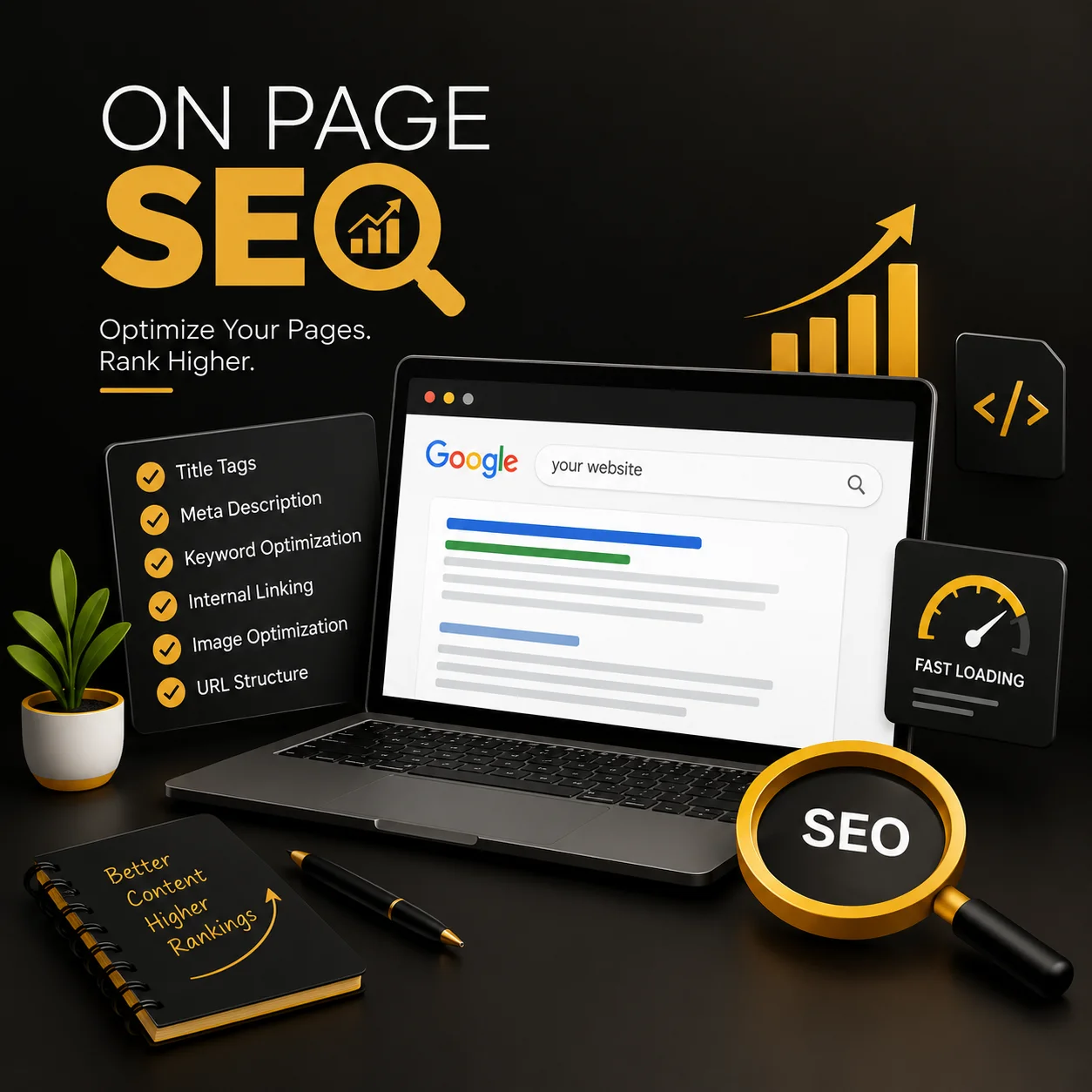
On-page SEO involves optimizing the content and elements on your website. This includes page titles, headings, keywords, meta descriptions, images, URLs, and internal links so that search engines and users can easily understand your pages.
Click Here

3. Technical SEO

3. Technical SEO

Technical SEO focuses on improving the technical aspects of a website. It includes website speed, mobile friendliness, site structure, security, crawlability, and indexability. Good technical SEO helps search engines access and understand your website properly.
Click Here

4. Off-Page SEO

4. Off-Page SEO

Off-page SEO refers to activities performed outside your website to improve its authority and reputation. One important part is earning quality backlinks from other relevant and trustworthy websites.
Click Here

5. Content SEO

5. Content SEO

Content SEO focuses on creating useful, relevant, original, and high-quality content that answers users' questions or solves their problems. Blogs, articles, product pages, guides, videos, and other useful resources can all support SEO.
Click Here

6. Local SEO

6. Local SEO

Local SEO helps businesses appear in searches related to a specific location. It is especially important for businesses such as restaurants, shops, clinics, and service providers. Optimizing business information, location details, and local listings can improve local visibility.
Click Here

Why SEO matters for your business

SEO (Search Engine Optimization) matters because it helps your business get discovered by people who are already searching for what you offer.

  • Increases online visibility – Helps your website appear higher in search results for relevant searches.
  • Brings targeted traffic – People arriving through search are often actively looking for a product, service, or solution.
  • Builds credibility – A strong search presence can make your business easier for potential customers to discover and research.
  • Generates leads and sales – Better visibility can create more opportunities for enquiries, bookings, purchases, or visits.
  • Provides long-term value – Unlike paid advertising, well-optimized content can continue attracting organic traffic after it is published.
  • Helps local businesses – Local SEO can help customers find businesses when searching for nearby services or products.
  • Reveals customer demand – Search queries can show you what customers are asking about, what problems they have, and what products or services they want.
  • Supports other marketing channels – SEO can strengthen content marketing, brand awareness, and overall digital marketing efforts.

In simple terms: SEO helps put your business in front of the right people at the moment they’re looking for something you can provide.


Final Thoughts

SEO is a long-term strategy that requires consistency, quality, and ongoing improvement. By creating useful content, optimizing your website for search engines and users, building relevant authority, and monitoring performance, you can improve your visibility and attract more organic traffic over time.

Rather than focusing only on rankings, prioritize providing genuine value to your audience. Search trends and algorithms will continue to evolve, but a user-first SEO approach remains a strong foundation for sustainable online growth.