
Social Media Marketing (SMM)
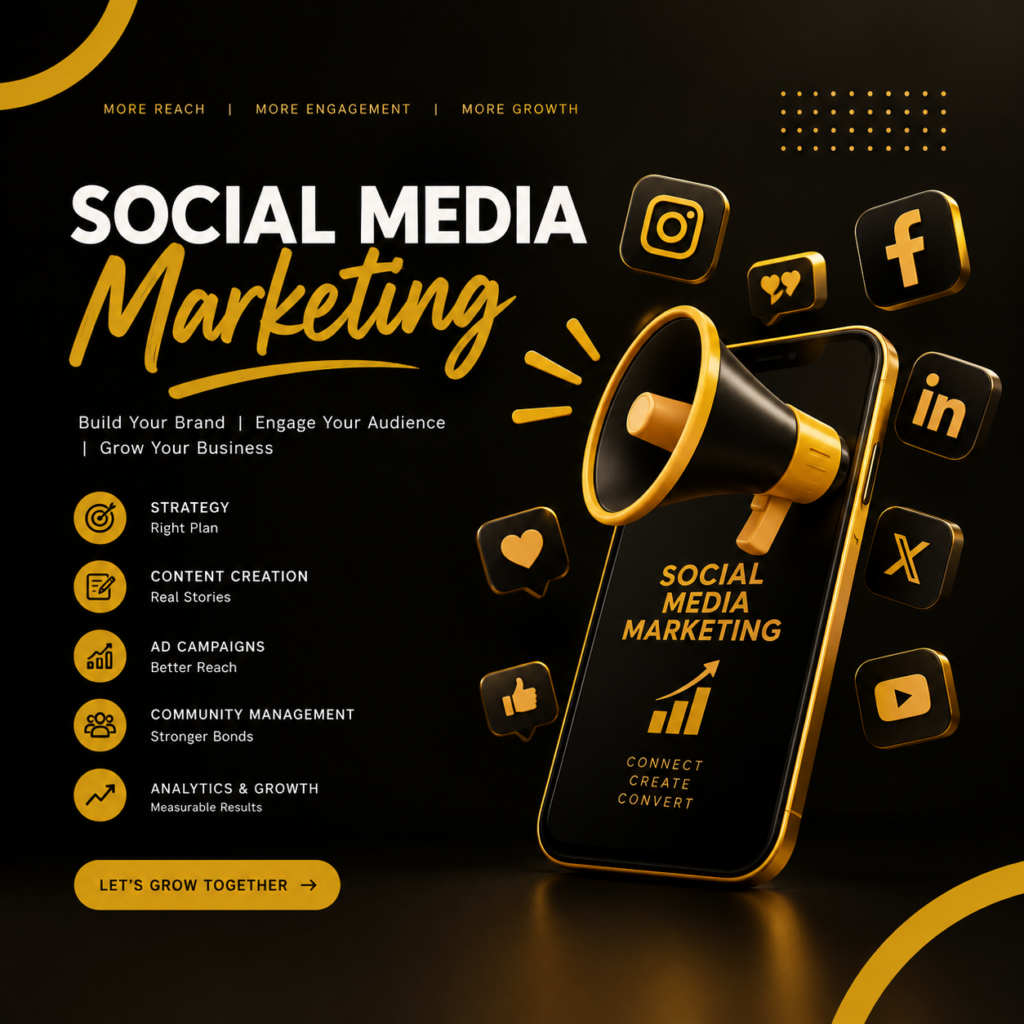
Social Media Marketing (SMM) is the use of social media platforms such as Instagram, Facebook, YouTube, LinkedIn, and X to promote a business, product, or service. It helps businesses reach their target audience, increase brand awareness, generate leads, and build strong relationships with customers. Through engaging posts, videos, stories, advertisements, and regular interaction, businesses can communicate directly with their audience. SMM also allows businesses to measure engagement and understand customer interests, making it an important part of modern digital marketing.
OurSMM Services Included:
- Social Media Strategy – Planning the right platforms, content, audience, and marketing goals.
- Content Creation – Creating posts, captions, videos, reels, stories, and other engaging content.
- Graphic Design – Designing attractive social media posters, banners, carousels, and promotional creatives.
- Content Scheduling – Planning and scheduling posts regularly for consistent social media activity.
- Hashtag Research – Finding relevant hashtags to improve content visibility and reach.
- Community Management – Responding to comments, messages, questions, and customer interactions.
- Social Media Advertising – Creating and managing paid advertisements on platforms such as Instagram and Facebook.
Search Engine Optimization (SEO)
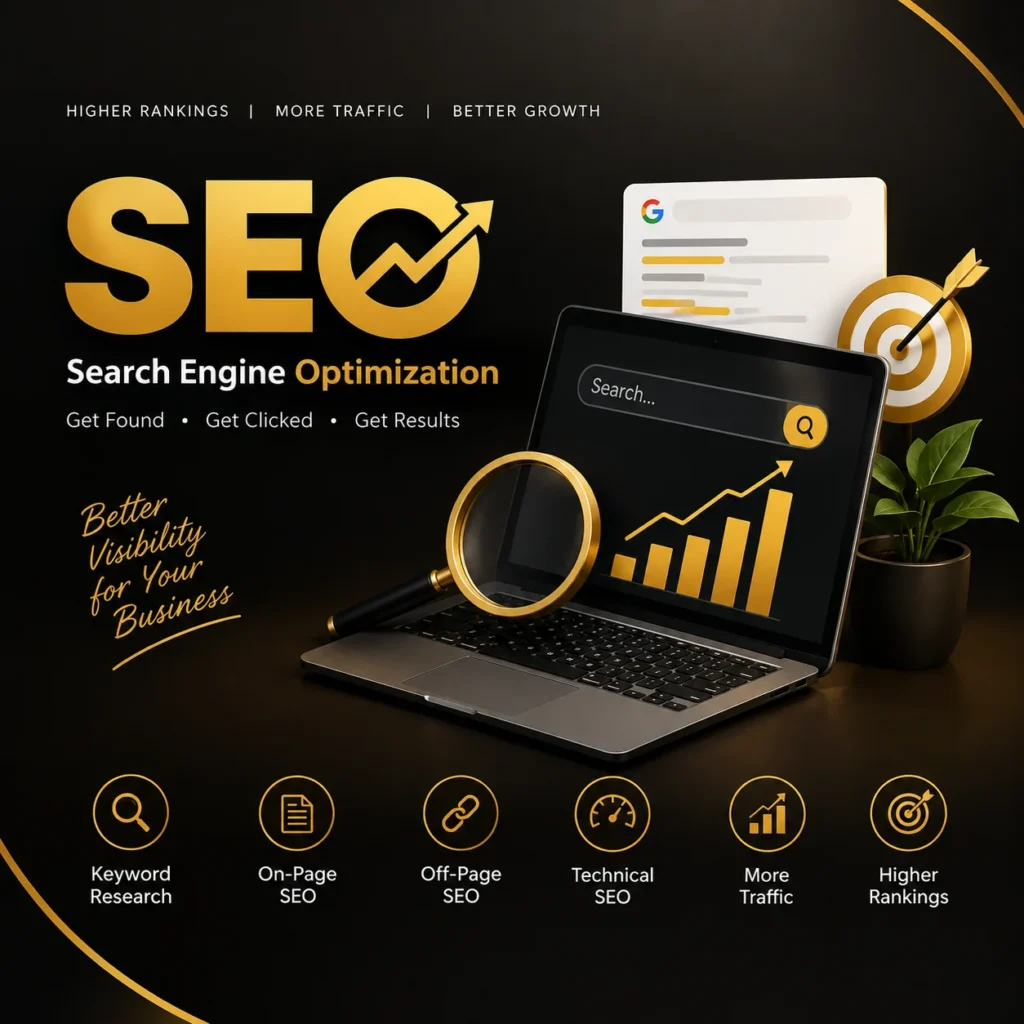
Search Engine Optimization (SEO) is the process of improving a website so that it can appear more prominently in search engine results. SEO services include keyword research, on-page optimization, technical SEO, content optimization, link building, local SEO, competitor analysis, and performance tracking. By using relevant keywords and creating useful, well-structured content, businesses can improve their online visibility and attract more organic traffic. SEO also helps businesses reach people who are actively searching for their products or services, making it an important part of digital marketing.
Our SEO services:
- Keyword Research – Finding the words and phrases people use when searching for products or services.
- On-Page SEO – Optimizing website pages, headings, content, URLs, images, and meta tags.
- Technical SEO – Improving website speed, mobile-friendliness, security, crawling, and indexing.
- Content Optimization – Creating and improving useful content based on relevant search terms.
- Local SEO – Helping businesses appear in local search results and map listings.
- Off-Page SEO – Building the website’s online authority through relevant backlinks and other external activities.
Email Marketing
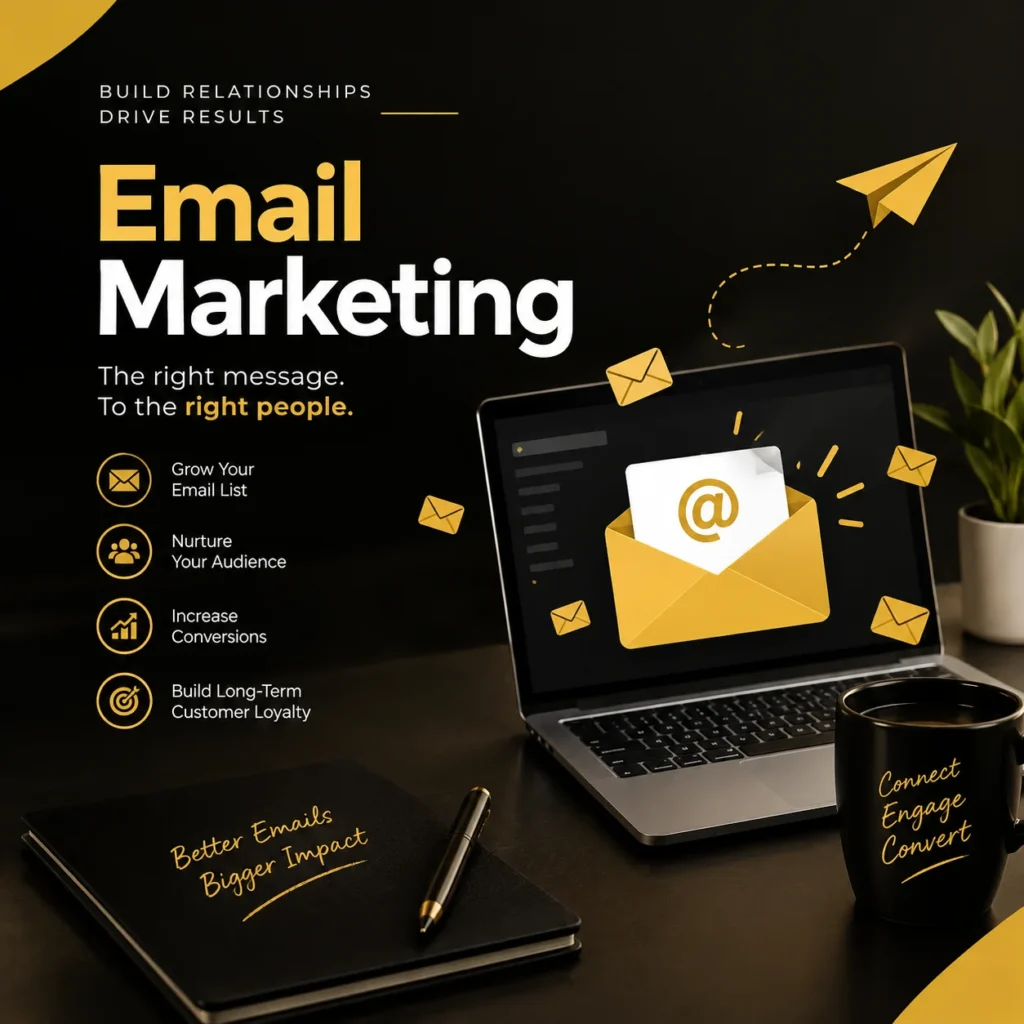
Email marketing is a digital marketing method that uses email to communicate with customers and potential customers. It can be used to share product updates, special offers, newsletters, company information, and personalized promotions. Email marketing helps businesses maintain regular communication with their audience, build customer relationships, increase website traffic, and encourage repeat purchases. Effective email marketing involves creating engaging content, managing subscriber lists, personalizing messages, and tracking results such as open rates, clicks, and conversions.
Our email marketing services:
- Email Campaign Creation – Designing attractive and engaging promotional and informational emails.
- Newsletter Marketing – Creating regular newsletters to keep customers informed and connected.
- Email List Management – Organizing and maintaining subscriber lists for effective communication.
- Email Automation – Setting up automated emails such as welcome messages, follow-ups, and reminders.
- Personalized Email Content – Creating relevant messages based on customer interests and behavior.
Paid Ads
Advertising is a digital marketing method used to promote products, services, and brands to a targeted audience through online platforms. Digital advertising can include search ads, social media ads, display ads, video ads, and other paid campaigns. It helps businesses reach potential customers, increase brand awareness, generate leads, and drive website traffic. By targeting audiences based on factors such as interests, location, demographics, and online behavior, businesses can make their advertising campaigns more relevant and measurable.
Paid Ad services
- Google Ads – Creating and managing paid search campaigns to reach people actively searching for your products or services.
- Facebook Ads – Running targeted advertisements on Facebook to reach relevant audiences.
- Instagram Ads – Creating image, video, Reel, and Story ads to promote your brand on Instagram.
- YouTube Ads – Creating and managing video advertising campaigns to reach potential customers on YouTube.
- Search Ads – Displaying paid advertisements on search engines based on relevant keywords.
- Display Ads – Using visual banner and image advertisements across relevant websites and apps.
- Audience Targeting – Selecting audiences based on factors such as location, interests, demographics, and online behavior.

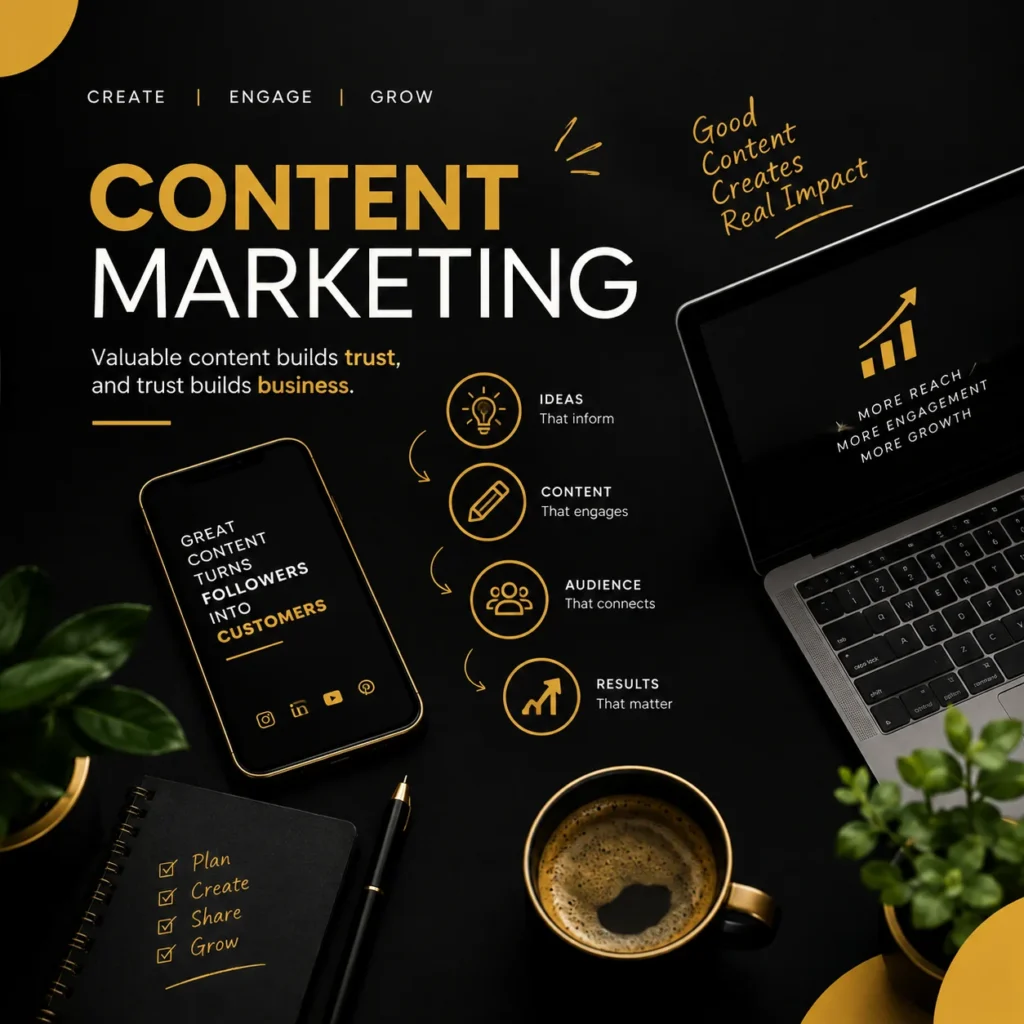
Content Marketing
Content marketing is a digital marketing strategy that focuses on creating and sharing valuable, relevant, and engaging content to attract and retain a target audience. It includes blog posts, articles, social media content, videos, infographics, and website content. Content marketing helps businesses increase brand awareness, build trust, improve online visibility, attract potential customers, and maintain long-term relationships with their audience. By providing useful information instead of relying only on direct promotion, businesses can engage customers and support their overall marketing goals.
Our content marketing services:
- Content Strategy – Developing a content plan based on your business goals and target audience.
- Blog & Article Writing – Creating informative and engaging blogs and articles.
- Website Content – Writing clear and persuasive content for websites and landing pages.
- Social Media Content – Creating engaging captions, posts, and content ideas for social media platforms.
- Video Content – Developing content ideas and scripts for promotional and educational videos.
- Infographic Content – Presenting useful information in attractive and easy-to-understand visual formats.
- SEO Content Writing – Creating search-friendly content using relevant keywords and SEO best practices.
- Content Editing & Optimization – Improving existing content for clarity, engagement, and search visibility.
- Content Distribution – Helping publish and promote content across relevant digital channels.
- Content Performance Analysis – Tracking content engagement, reach, traffic, and other key performance metrics.
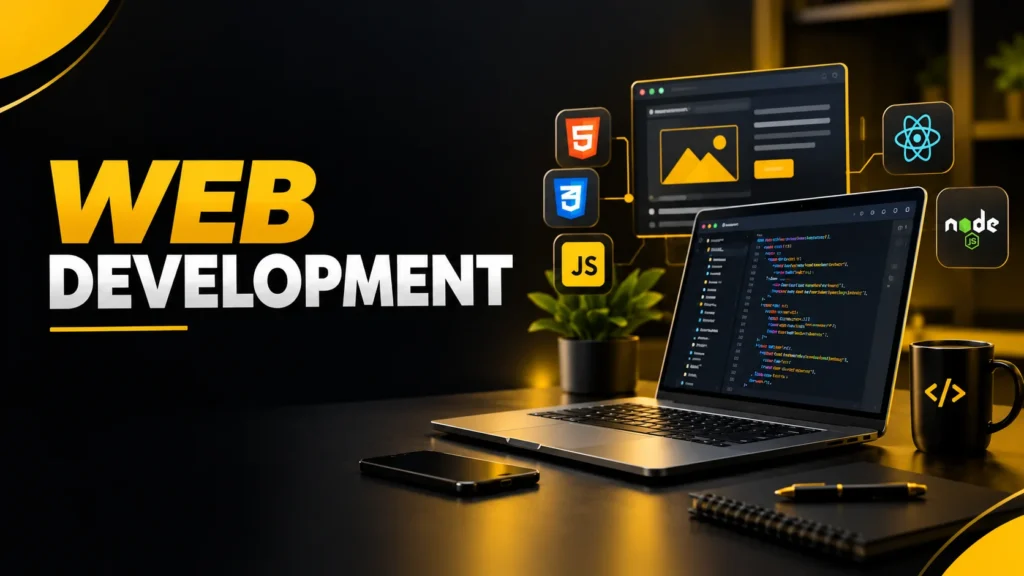
Web Development
Web development is the process of creating, designing, and maintaining websites that are functional, responsive, and user-friendly. It includes website design, front-end and back-end development, e-commerce development, content management systems, website optimization, and ongoing maintenance. A well-developed website helps businesses establish a strong online presence, provide a better user experience, showcase their products or services, and convert visitors into customers.
Our web development services:
- Website Design & Development – Creating attractive, functional, and user-friendly websites.
- Responsive Web Development – Building websites that work smoothly on desktops, tablets, and mobile devices.
- Business Website Development – Developing professional websites to showcase your company, products, and services.
- E-Commerce Development – Creating online stores with product listings, shopping carts, payment options, and order management.
- Landing Page Development – Designing focused landing pages for marketing campaigns and lead generation.
- CMS Development – Building and managing websites using content management systems.
- UI/UX Development – Creating simple, engaging, and easy-to-navigate user experiences.
- Website Maintenance – Providing regular updates, improvements, backups, and technical support.
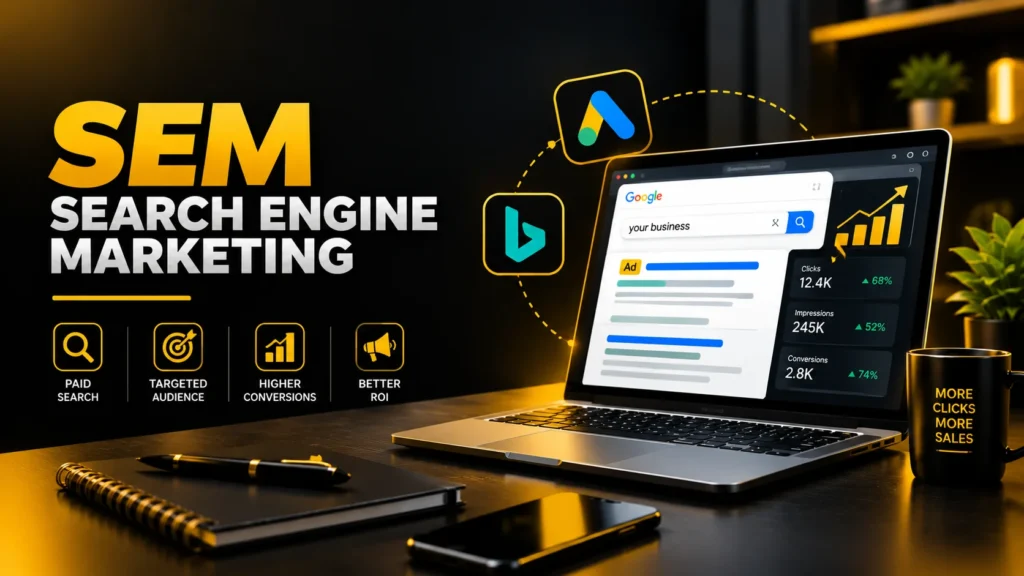
Search Engine Marketing (SEM)
Search Engine Marketing (SEM) is a digital marketing strategy that helps businesses promote their products and services through paid advertisements on search engines. SEM allows businesses to display ads to users who are actively searching for relevant products, services, or information. It includes keyword research, ad creation, audience targeting, campaign management, budget optimization, and performance tracking. SEM can help increase website traffic, generate leads, improve brand visibility, and reach potential customers at the right time.
Add Your Heading Text Here
- Keyword Research – Finding relevant search terms that potential customers use to find products or services.
- Google Ads Campaign Setup – Creating and setting up targeted search advertising campaigns.
- Ad Copywriting – Writing attractive headlines, descriptions, and calls-to-action for search ads.
- Audience Targeting – Targeting potential customers based on location, interests, demographics, and search behavior.
- Bid Management – Managing bids and budgets to use the advertising budget effectively.
- Landing Page Optimization – Improving landing pages to provide a better user experience and support conversions.
- Conversion Tracking – Tracking actions such as form submissions, calls, purchases, and enquiries.
- Campaign Management – Monitoring and managing campaigns regularly to maintain performance.
- Performance Analysis – Analyzing clicks, impressions, conversions, cost, and other campaign metrics.
- Campaign Optimization – Making data-based changes to keywords, ads, targeting, and budgets to improve campaign performance.